
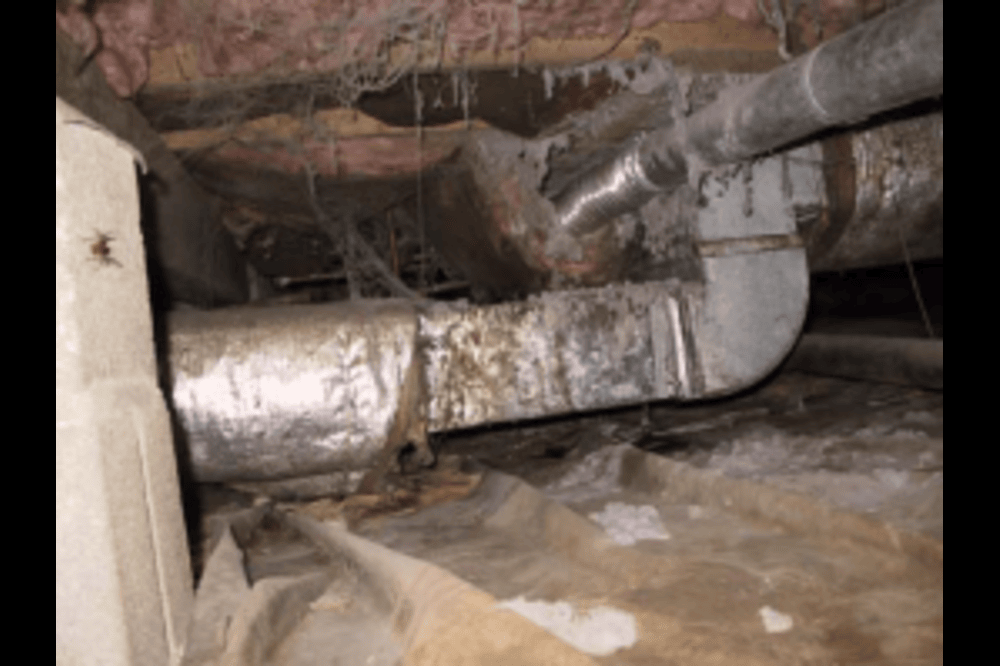
Open a crawl space hatch in the middle of a Southern summer and you may find damp ground cover, water droplets on the ducts, even patches of surface mold.
Alarming as that looks, much of it is predictable behavior for a vented crawl space, not evidence of a defect.
This guide separates what a vented crawl space is actually designed to do from the myths that derail home inspections and real estate transactions.
What a Vented Crawl Space Is Designed to Do
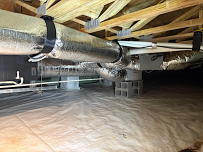
A vented crawl space exchanges air with the outdoors through louvered vents set into the foundation walls.
That vapor retarder is typically six-mil plastic sheeting laid over the soil, blocking ground moisture from evaporating up into the space.
The goal of the design is equilibrium with outside conditions, so the wood joists, beams, and subfloor never hold enough moisture to decay.
Notice what the goal is not. The code does not promise a dry, sterile space. It aims to protect the structure, and nothing more.
That distinction is the starting point for resolving crawl space moisture and mold problems without overreacting to normal seasonal behavior.
Myth 1: Standing Water Always Means a Leak
Find water on the vapor barrier in July or August, and the first assumption is usually a plumbing failure somewhere overhead.
In a vented crawl space, the likelier explanation is condensation. Humid outside air enters through the vents and meets cold air conditioning ducts.
The ducts sweat, the droplets fall, and small puddles collect on the plastic below. In peak summer, this is close to routine.
It comes down to how relative humidity behaves in hot weather: cool surfaces push the surrounding air past its dew point, and water appears.
Condensation of this kind poses no threat to the structure or the home’s air quality. It evaporates back into the air as conditions change.
The source still matters, though. Genuine water intrusion in a crawl space or stormwater pushing in from outside are different problems with different fixes.
A useful report names which one it found. “Water observed” without a cause identified is an open question, not a finding.
Myth 2: A Healthy Crawl Space Never Has Mold
A vented crawl space in a humid region will almost inevitably show some surface mold during hot weather.
Mold spores are everywhere outdoors, and the vents deliver them along with moisture. The EPA notes that growth becomes likely once relative humidity holds above 60 percent.
Summer crawl space air in the Southeast routinely exceeds that threshold, so light surface growth is predictable rather than an anomaly.
That does not make all mold harmless. The myths surrounding black mold cut both ways: panic is unwarranted, and so is ignoring heavy or spreading growth.
Myth 3: More Ventilation Will Dry It Out
When moisture appears, the instinct is to add vents or install fans to move more air. In summer, this makes the problem worse.
The ventilation itself is what carries humid air into the space. Adding more of it simply adds more moisture.
The seasonal nuance is real, and it is covered in whether crawl space vents should stay open or closed.
Dehumidifiers face the same math. Running one in a space with open louvered vents means trying to dehumidify the entire outdoors.
What Inspectors and Real Estate Professionals Should Know
Inspection reports often flag summer condensation or light surface mold as defects without identifying where the water came from.
An unexplained note about water can spook buyers, stall a closing, and shave real money off a sale price over predictable seasonal behavior.
The useful questions are simple. Is the water condensation or intrusion? Is the mold light surface growth, or established and spreading?
Reports that answer those questions protect transactions. Reports that merely observe water tend to jeopardize them.
When a Mold-Free Crawl Space Is the Goal
A code-approved vented crawl space protects the structure tolerably well. It will never guarantee a mold-free environment in a humid climate.
Homeowners who want genuinely dry, clean conditions under the house need a different design: sealed vents, full encapsulation, and mechanical dehumidification.
Crawl space encapsulation converts the area into a controlled environment instead of one that mirrors the weather outside.
It is a bigger investment than leaving the vents in place, and it is the only approach that changes what the space can achieve.
The Bottom Line
A vented crawl space behaving predictably is not a defect. A real moisture problem is not something to explain away. Telling them apart is the whole game.
Not sure which one you are looking at? DocAir diagnoses buildings as complete systems, using thermal imaging, air quality testing, and moisture proofing expertise to identify the actual source before anyone spends money on the wrong fix. Call 615.373.2498 or request an evaluation.