
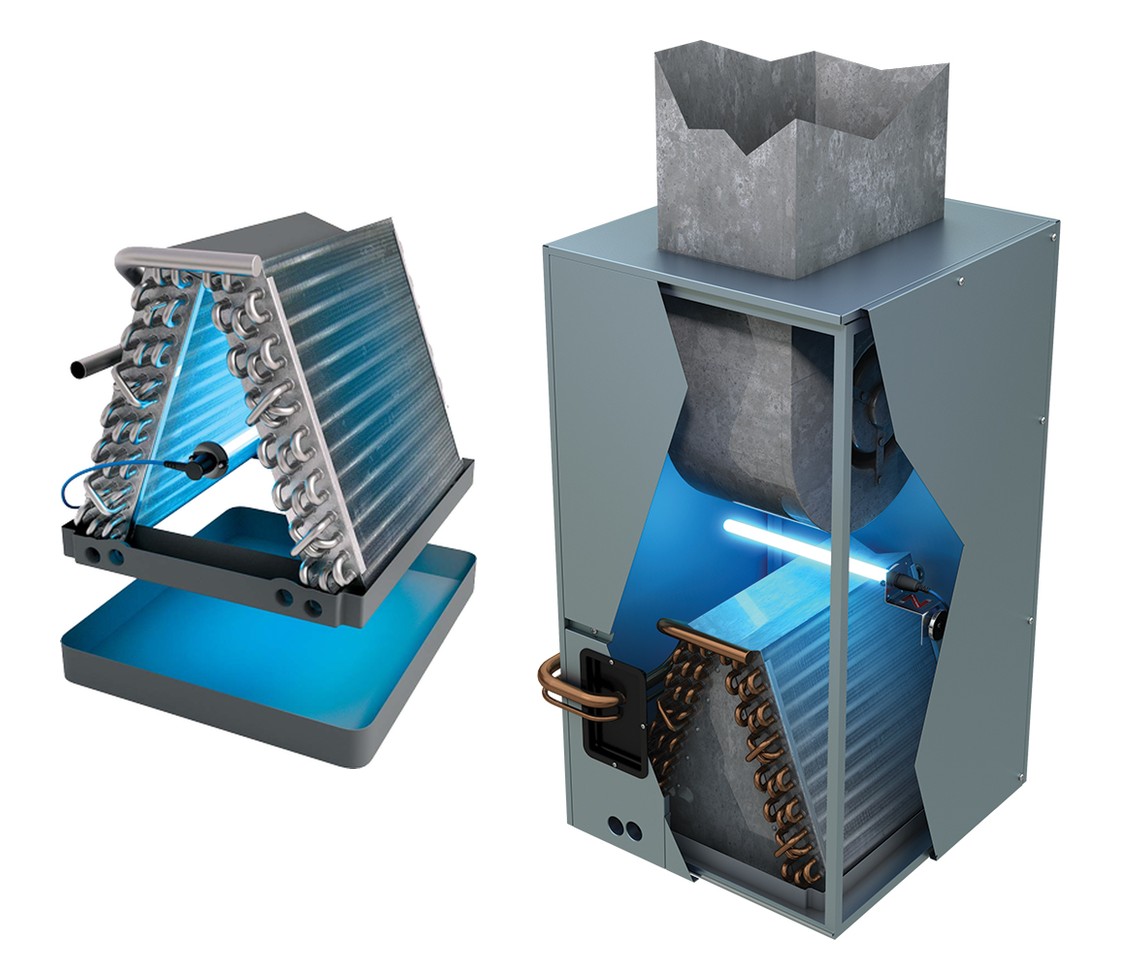
Every time your air conditioner runs, the indoor evaporator coil pulls moisture out of the air. That water sits on the coil fins, in a dark cabinet, for hours.
Dark, cool and wet is exactly what mold and biofilm need. At DocAir, we often recommend a UV-C lamp system to stop that growth early.
Here is what UV-C lighting actually does, where it should be mounted, and how to choose the right kit for your system.
What UV-C Lighting Does Inside an HVAC System
A UV-C lamp shines germicidal ultraviolet light, at about 254 nanometers, onto the coil. That light damages the DNA of microorganisms so they cannot multiply.
Its main job is surface control, not air cleaning. Aimed at the coil, it keeps the fins and drain pan free of growth.
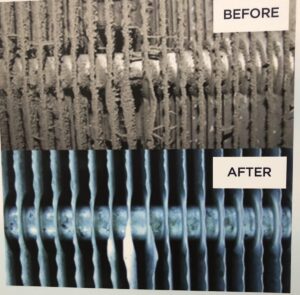
Research summarized by Lawrence Berkeley National Laboratory shows that irradiating coils and drain pans can sharply cut mold and bacteria growth, and break down existing biofilm.
Why UV Lighting Matters for Homeowners
Cleaner air coming off the coil
Mold and bacteria on a coil can shed particles into the airstream, and every supply vent carries them into your rooms. A clean coil removes that source.
For people sensitive to mold, fewer particles can mean less irritation. A musty smell from the vents is often the first clue, like this upstairs AC that kept smelling musty.
Not sure what is in your air? Air quality testing tells you what is actually there before you spend money on a fix.
A coil that holds its efficiency
Even a thin layer of biofilm insulates the fins and narrows the gaps air has to pass through. The system then works harder to move the same heat.
A clean coil lets the equipment run as designed. That helps keep energy use in check and takes strain off the blower and compressor.
Why Middle Tennessee coils see more growth
Our cooling season is long and humid, so coils stay wet for months. Homes that struggle with indoor relative humidity tend to see coil growth sooner.
Fan settings matter too. Running the blower on ON instead of AUTO keeps moisture moving across the coil, as this thermostat fan case study shows.
Where to Place UV Lights
The right spot depends on how your heat pump or furnace coil is built. UV only works where it can reach, so the lamp needs a clear view of the coil.
Open A-coil: mount the lamp inside the coil
If your system uses an A-frame coil with an open interior, we recommend installing the lamp inside the “A.” From there it covers both coil faces and the drain pan.
Enclosed A-coil: mount the lamp above the coil
Vertical A-coils sealed inside a cabinet give no internal access. In that case, we recommend mounting the lamp directly above the coil.
Set it high enough for the light to spread across the whole coil face, but close enough to keep irradiance strong. Intensity drops fast with distance.
Internal placement on an open A-coil (left) and above-coil placement in an enclosed air handler (right)
How to Select and Install a UV Light System
1. Inspect your equipment
With the power off, open your air handler or furnace cabinet. Check whether the coil interior is reachable or the lamp must sit above it, as shown above.
2. Choose the right kit
Pick a germicidal UV-C lamp (254 nm) made for HVAC use. Match it to your system’s power supply, typically 24V or 120V, and to your coil size.
Choose an ozone-free lamp. The EPA’s guide to home air cleaners also notes UV should work alongside good air filtration, not replace it.
3. Plan for safety and upkeep
UV-C light harms eyes and skin, so the lamp must be off whenever the cabinet is open. A door interlock switch that cuts power automatically is worth having.
The EPA warns against UV devices not designed for this job. Lamps also lose output with age, so replace bulbs on the maker’s schedule.
DIY or professional installation?
If you are comfortable with basic wiring and drilling, many plug-in and 24V kits come with simple mounting instructions.
Want it placed and sized right? We check the coil, drain pan and setup first, the same science-based HVAC approach we use on every job.
A Clean Coil Starts With Knowing What Is There
UV-C lighting is one of the simplest ways to keep a coil clean, protect airflow and cut off a common source of musty odors.
Noticing odors, high humidity or weaker cooling? Schedule a DocAir air quality evaluation or call 615.373.2498. We measure first, then recommend the fix.