If you have ever opened a home air-quality or mold inspection report and seen numbers highlighted in red, you know that instant wave of worry. The natural assumption is that red means danger, and danger means an expensive problem. The reality is usually more reassuring, and a lot more interesting. Those colored numbers are only one piece of a much bigger picture, and reading them in isolation is the single most common mistake homeowners and real estate agents make.
The Truth About Those Red-Flagged Results
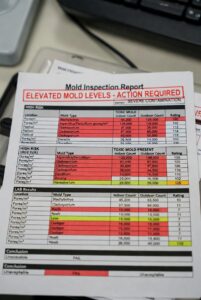
Context is everything. Many labs automatically highlight certain mold types because they can be associated with moisture. Chaetomium is a classic example. It is a heavier spore that does not stay airborne for long, so when it shows up on a sample, the software tends to flag it so the reader takes notice.
But a flag is not a verdict. When the counts are very low, and especially when the dominant spores are common outdoor molds like Basidiospores and Cladosporium, it often simply means your indoor air is mirroring the natural outdoor environment. That is exactly what you would expect to see in a typical, healthy home that exchanges air with the outside.
It is worth remembering how crowded indoor air can be in the first place. The EPA notes that indoor levels of some pollutants are often two to five times higher than outdoor levels, which is why testing and ventilation matter so much. A handful of trace spores on a slide is a very different situation from a visible, growing colony.
Bottom line: the red highlight is usually a software default meant to make sure you notice a result, not a declaration of a toxic or emergency. In most low-level cases with no visible water damage or active mold growth, aggressive remediation is not required.
Mold Report Red Flags
Practical Next Steps for a Low-Level Result
When the numbers are low, and there is no obvious moisture source, a measured approach beats a panicked one. Science-based decisions are driven by physical evidence, not by a single air sample. A sensible sequence looks like this:
- A quick visual inspection for any signs of moisture, water staining, or active growth.
- Standard cleaning, since heavier spores are often just settled dust disturbed during testing. Routine HEPA vacuuming and dusting usually handle these levels. A professional air quality test can confirm whether anything more is warranted.
- Optional professional fogging plus HEPA cleaning to pull particulates, including mold spores, out of the ambient air. This is typically offered on a time-and-materials basis.
If the area is dry, there is no visible growth, and the dominant spores are ordinary outdoor types, a trace reading does not point to a widespread or emergency condition. The air is largely reflecting the outdoors, which is generally a good sign.
The Much Bigger Problem Most Homes Face
This kind of report quietly points to a far more common issue that almost every modern home deals with. Here is the question worth asking: how does your home actually get its fresh air? For most homes, the honest answer is that they leak it in.
After the energy-efficiency push of the 1970s, homes got tighter. Better seals, weather-stripping, and caulk everywhere saved energy, but proper ventilation got left behind. The EPA specifically links rising indoor pollutant concentrations to energy-efficient construction that lacks sufficient mechanical ventilation. Even brand-new homes still rely on uncontrolled air sneaking in through cracks, ductwork, crawl spaces, and wall cavities.
In a humid climate like Middle Tennessee, that uncontrolled outside air often carries moisture, pollen, dust, and pollutants with it. The result can be hidden condensation and the kind of low-level mold readings that started this whole conversation. The leak is the real problem, not the lab flag.
The Fix: Controlled, Ultra-Clean Air
There is a better option than leaving your air to chance. Instead of random leaky air, a home can be sealed and then supplied with properly filtered, balanced ventilation through the existing HVAC system. That turns the air supply from accidental into intentional.
How a Controlled Ventilation System Is Installed
- Locate the leaks using blower door testing, thermal imaging, and smoke tests.
- Seal the leaks with expanding foam, weather-stripping, and caulk.
- Seal leaks in the return air plenum so the system is not pulling in unconditioned air.
- Connect a HEPA filter system to the existing air handler.
- Balance the supply air so the home receives the right proportion of fresh, filtered air.
What That Actually Delivers
- Continuous, balanced fresh air reaching every area of the home.
- HEPA filtration on incoming outside air, achieving near-HEPA indoor quality without hurting efficiency.
- Enhanced moisture removal as air crosses the heat exchanger.
- A gatekeeper effect that dramatically reduces dust, pollen, mold spores, and other outdoor pollutants. Pairing this with whole-home air filtration replaces random leaky air with pure, conditioned air that continuously dilutes indoor contaminants.
The result: cleaner air, fewer allergens, lower mold risk, better humidity control, and improved energy efficiency, all at once.
The Next Time You See Red on a Report
Do not panic, and do not just settle for the idea that it is normal for your area. A red flag is an invitation to look closer, not a reason to write a remediation check. Read the full picture, confirm there is no moisture or active growth, and then decide whether the smarter long-term move is to control the air your family breathes every single day rather than crossing your fingers and hoping the next test comes back clean.
If you are tired of worrying about hidden mold, allergens, or that stale tight-house feeling, DocAir can help you read your results honestly and decide on the right next step, whether that is a simple diagnostic visit, targeted cleaning, or a full ProofPositive Clean Air System. As Nashville’s engineering-based building science experts, we give straight answers and practical options, no pressure. Call 615.373.2498 or request an evaluation here. Breathing easier in your own home should not feel like a luxury.