
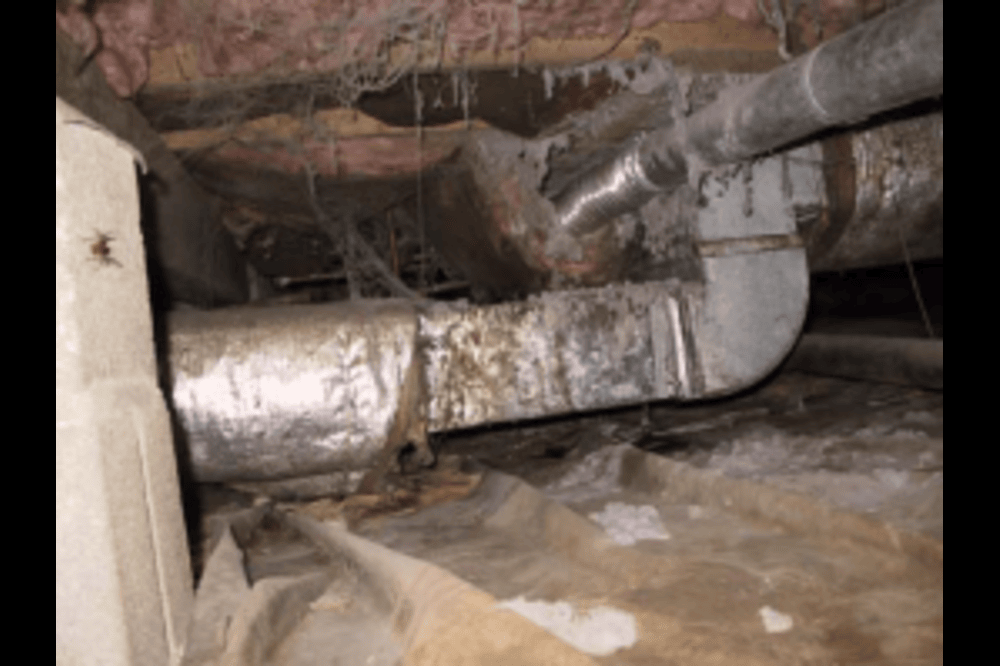
“My clothes dryer is located in a utility room directly over a crawl space. At the present time, the duct from the dryer discharges into the crawl space. What is wrong with that?”
How Vented Crawl Spaces Are Supposed to Work
Most crawl spaces are vented to the outside. This configuration is intended to keep them dry by allowing outside air to flow through. This approach works tolerably well during most of the year, but not so well during hot, humid weather. When moisture-filled air flows into a crawl space that is cooler than the dew point, condensation will form on floor joists and subfloors. Surface mold is a predictable consequence of this condensation. If the elevated moisture levels persist, the wood will begin to deteriorate from rot.
Why Dryer Exhaust Makes It Worse
Ducting the clothes dryer into the crawl space results in the immediate condensation of moisture onto the floor joists and subfloor, where it is absorbed into the wood. The greater the number of occupants, the greater the damage can be. Now the summertime moisture management problem extends into the cooler months of the year as well.
The Bottom Line
If the crawl space is very large and there are only a few occupants, the damage from rot could be minimal. In most cases, discharging dryer exhaust into the crawl space is the quickest way to destroy the structural integrity of the floor system.
Venting a dryer into the crawl space is an easy problem to fix, and the moisture it leaves behind is one DocAir corrects every day. Request an evaluation and we will assess the venting, the moisture, and the condition of your floor system, then explain exactly what your home needs. Science before sales.